How Exotic African Bird Illustrations Are Transforming Modern Design Projects
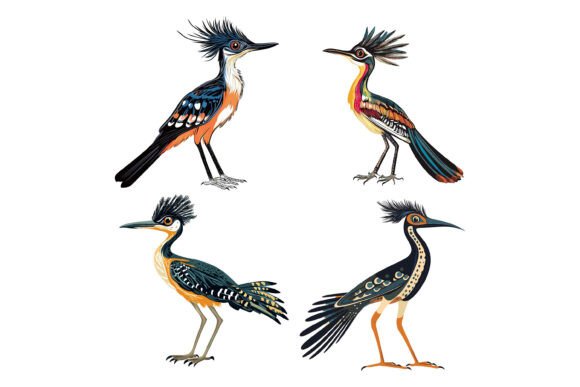
In a digital landscape saturated with generic stock imagery, creative professionals are increasingly turning to specialized illustration sets that offer both artistic distinction and practical flexibility. The Set of Exotic African Birds represents a growing category of design assets that combine cultural richness with technical precision, giving designers, marketers, and entrepreneurs a way to infuse their work with authentic visual storytelling. When you encounter a collection labeled Hello Welcome to our Special AI EPS Collections, you are stepping into a curated ecosystem built specifically for creators who demand more than cookie-cutter graphics.
This particular illustration set features a carefully composed ensemble of African bird species rendered in vector format, complete with AI, EPS, and JPG file types. But beyond the surface-level description lies a deeper conversation about how design resources are evolving to meet the expectations of a multi-platform, deadline-driven creative economy.
The Rising Demand for Culturally Rich Vector Illustrations
Over the past several years, the design industry has witnessed a pronounced shift toward visuals that tell a story rooted in a specific place, culture, or natural environment. Generic icons and abstract shapes no longer suffice for brands and content creators aiming to establish emotional resonance. The Set of Exotic African Birds taps directly into this trend by offering illustrations that carry the vivid colors, distinctive silhouettes, and ecological significance of Africa's avian diversity. From the lilac-breasted roller to the grey crowned crane, these birds evoke a sense of wonder that transcends geographic boundaries.
Marketers building campaigns around travel, conservation, luxury goods, or even children's products are discovering that exotic bird imagery creates an immediate visual hook. The organic forms and striking plumage patterns lend themselves beautifully to branding that wants to signal vitality, freedom, and natural elegance. This is not merely decoration; it is strategic visual communication that leverages the universal appeal of wildlife while supporting specific creative objectives.
Why Vector Format Matters More Than Ever
For the uninitiated, the inclusion of AI EPS files alongside standard JPGs might seem like a minor technical detail. In reality, it is the defining feature that separates professional-grade assets from amateur alternatives. Adobe Illustrator (AI) and Encapsulated PostScript (EPS) formats preserve full editability, meaning every feather, beak contour, and color gradient can be modified without quality degradation. This scalability is essential in an era where a single illustration might appear on a business card, a website hero banner, a trade show backdrop, and a mobile app icon.
The practical implications are substantial. Consider a freelance graphic designer tasked with creating a resort's seasonal branding. They might need to adjust the birds' color palette to match an existing style guide, enlarge a specific element for signage, or isolate a single bird motif for embroidery on staff uniforms. With a well-structured AI EPS file, these modifications are not only possible but efficient. The neatly organized file and layer structure referenced in the collection's description is not marketing fluff; it is a genuine productivity multiplier that reduces billable hours and accelerates turnaround times.
Cross-Platform Compatibility as a Professional Standard
Another notable aspect of the collection is its explicit design for both Mac and Windows users. While this may appear to be a baseline expectation, it reflects a deeper understanding of the fragmented nature of creative tooling. Design teams are rarely homogeneous in their operating system preferences, and freelance collaborators often work across different platforms. An illustration set that performs consistently regardless of OS removes friction from collaborative workflows, ensuring that colors render accurately and files open without corruption whether you are using Adobe Creative Cloud on macOS or CorelDRAW on Windows.
This cross-platform reliability extends to the collection's suitability for print, web, symbols, apps, and infographics. The modern designer's output channels are increasingly diverse, and a single asset set must perform across all of them. A bird illustration used in a printed brochure must maintain crisp edges at 300 DPI; the same illustration embedded in a responsive website must load quickly and scale gracefully; when repurposed as an app icon or infographic element, it must remain legible at small sizes. Vector artwork native to AI EPS format inherently satisfies these demands, making the collection a versatile addition to any professional toolkit.
Organizational Excellence and the Hidden Cost of Messy Files
Anyone who has downloaded a poorly constructed vector file understands the frustration of encountering dozens of unnamed layers, ungrouped objects, and inexplicable clipping masks. The promise of a neatly organized file and layer structure speaks directly to this pain point. When layers are logically labeled and grouped—say, separating each bird species into its own clearly named set of sublayers—the editing process becomes intuitive rather than investigative. This organizational care signals that the designer behind the collection understands professional workflows and respects the end user's time.
For creative directors managing multiple projects simultaneously, organized assets reduce cognitive load and minimize errors. A marketing coordinator tasked with localizing campaign materials for different regions can quickly locate and modify specific elements without accidentally altering others. This efficiency gain compounds across teams and timelines, reinforcing why seasoned professionals gravitate toward well-structured design resources.
Detail, Consistency, and the Perception of Quality
In visual branding, consistency is often the dividing line between amateur output and polished professionalism. The collection's emphasis on perfection in details and consistency addresses this directly. When multiple bird illustrations coexist within a single project—perhaps as part of a pattern design, a series of social media posts, or an illustrated map—they must share a coherent visual language. Line weights should feel uniform, shading styles should match, and the overall aesthetic should read as a unified family rather than a disparate assortment.
This consistency extends beyond the illustrations themselves to influence how audiences perceive the associated brand or message. A luxury travel company using mismatched bird graphics risks undermining its credibility; the same company deploying a harmonized set of exotic African birds conveys attention to detail and curatorial intentionality. In competitive markets, these subtle perceptual cues can meaningfully impact customer trust and engagement.
The Practical Value of Editability and Color Modification
One of the most compelling attributes highlighted in the collection's description is the ability to edit, change colors, and modify icons easily according to your needs. This flexibility is far more than a convenience; it is a strategic advantage in a design environment defined by rapid iteration and A/B testing. A marketer running split tests on ad creatives might need to experiment with different color treatments of the same bird illustration to determine which variant drives higher click-through rates. With editable AI EPS files, this experimentation becomes a matter of minutes rather than requiring a complete redesign or the purchase of additional assets.
Similarly, seasonal rebranding efforts often demand color palette shifts that would be impossible with raster-only images. A bird rendered in warm tropical hues for a summer campaign can be recolored with cool jewel tones for a winter collection, all while preserving the integrity of the original artwork. This adaptability extends the useful lifespan of the illustration set, delivering ongoing value long after the initial purchase.
How Exotic African Birds Fit Into Contemporary Design Trends
The broader design landscape is currently embracing several movements that align naturally with the aesthetic of exotic African birds. The resurgence of maximalism in graphic design—characterized by rich colors, layered compositions, and ornate detailing—finds a perfect counterpart in the intricate plumage and vibrant hues of species like the African hoopoe or the violet turaco. At the same time, the growing emphasis on biophilic design principles across digital and physical spaces creates ongoing demand for nature-inspired visuals that reduce stress and enhance well-being.
In the realm of packaging design, products positioned as natural, sustainable, or artisanal are increasingly incorporating wildlife motifs to reinforce their brand narratives. An organic tea brand might feature a subtle sunbird illustration on its packaging; a fair-trade chocolate company could integrate African grey parrot imagery into its visual identity. These applications demonstrate how the Set of Exotic African Birds can function as a bridge between specific design assets and broader cultural and commercial currents.
Digital Asset Collections and the Evolution of Creative Workflows
The very concept of purchasing illustration sets reflects a fundamental shift in how creative work gets done. In previous decades, designers either created everything from scratch or relied on expensive, restrictive stock photography. Today's hybrid approach—combining original design with curated, editable assets—enables smaller teams and solo practitioners to produce work that rivals large agencies in quality and speed. This democratization of design resources has empowered freelancers, startup founders, and nonprofit communicators to access professional-grade visuals without the overhead of a full-time illustration department.
The AI EPS illustration set model also aligns with the growing emphasis on modular design systems. Rather than commissioning bespoke illustrations for every project, organizations can invest in versatile collections that serve multiple use cases over extended periods. A single set of exotic African birds might support a travel agency's website refresh, an educational publisher's children's book, a conservation nonprofit's annual report, and a café's mural design. Each application extracts new value from the same foundational assets, making the initial investment remarkably efficient.
Making Informed Decisions in a Crowded Design Marketplace
With countless illustration sets available online, distinguishing genuine quality from inflated claims requires discernment. Savvy buyers look beyond preview thumbnails to assess the structural integrity of the offered files. Key indicators of a worthwhile purchase include the presence of fully editable vector formats, logical layer organization, consistent rendering quality across all included elements, and clear documentation of compatible software and platforms. The Set of Exotic African Birds positions itself favorably against these criteria by explicitly addressing file formats, organizational structure, cross-platform compatibility, and editability.
For creative professionals who routinely operate under tight deadlines, the assurance of a well-prepared asset set translates to reduced stress and more predictable project timelines. Entrepreneurs building brand identities benefit from the confidence that their visual resources will scale alongside their ambitions. Even hobbyists and enthusiasts gain access to illustrations that elevate personal projects from casual to polished, reflecting the broader trend of prosumer-grade tools becoming accessible to non-specialists.
The Enduring Appeal of Avian Imagery in Visual Communication
Birds have captivated human imagination for millennia, symbolizing everything from freedom and transcendence to communication and perspective. African bird species, with their extraordinary diversity of form and color, amplify this symbolic power with a distinct sense of place. Incorporating these illustrations into visual projects connects audiences to a rich natural heritage while offering endless creative possibilities for reinterpretation and adaptation. Whether used as standalone focal points or woven into complex design systems, exotic African birds bring a timeless yet fresh energy to contemporary visual communication, reminding us that the most effective design assets are those that combine beauty, meaning, and practical utility in equal measure.