Chicken Illustrations in Vector Format: Understanding AI EPS Collections and Their Place in Modern Design
Finding the right visual asset can shape how a project comes together, especially when the subject is as specific and familiar as a chicken. Whether you are working on branding for a farm-to-table restaurant, designing educational materials about poultry, or creating infographics for an agricultural report, the format and quality of your illustration files matter more than most people realize. Chicken-themed graphics appear in a surprising range of industries, and the rise of professionally organized AI EPS collections has changed how designers approach these projects.
This article walks through what makes chicken illustration sets distinct, how different file formats serve different needs, and what to evaluate before adding a collection to your toolkit. The goal is not to push one product over another but to give you a clearer sense of what matters when you are comparing options.
What Does a Chicken Illustration Collection Actually Include
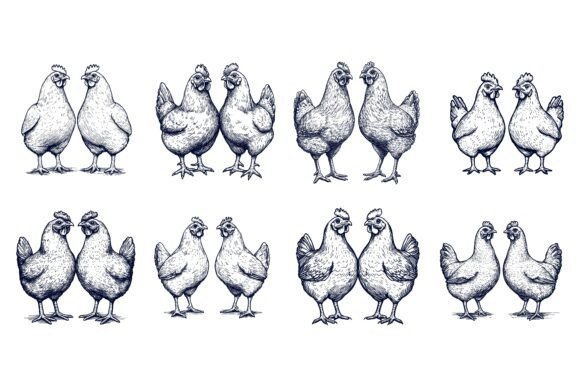
At its core, a chicken illustration set built around AI EPS files is a curated bundle of vector-based graphics centered on poultry imagery. The native format is typically Adobe Illustrator, with EPS serving as a widely compatible alternative that works across a range of design software. When a collection also includes JPG previews or rasterized versions, it becomes easier to browse and use without opening every vector file.
What sets these apart from a random assortment of clip art is the attention to structure. A well-organized collection treats each chicken icon, scene, or character as its own contained file, with layers that make sense when you open them. You might find a single rooster illustration broken into separate editable elements such as the comb, wattle, feathers, body, and background. This kind of layer organization means you can isolate a detail, change the color of the plumage, or scale the entire graphic without losing fidelity.
The inclusion of both Windows and Mac compatibility signals that the files are not locked to a single operating system, which matters for teams working across platforms. When designers talk about consistency in a collection, they often mean that every chicken graphic feels like it belongs to the same family, sharing a unified style, line weight, and level of detail. That consistency is difficult to achieve when pulling images from multiple unrelated sources.
Why File Format Choices Influence Your Workflow
Understanding the difference between AI, EPS, and JPG formats helps explain why certain collections are priced or positioned differently. Each format serves a distinct purpose, and knowing when to use which can save hours of frustration.
AI files are the native format for Adobe Illustrator. They preserve full editability, including layers, paths, gradients, and text elements. If you need to modify a chicken illustration extensively, change its posture, recolor individual sections, or extract a single element like an egg or a feather, working in AI gives you the most control. The tradeoff is that AI files are less universal; you generally need Adobe Illustrator or a compatible program to open and edit them properly.
EPS files function as a bridge format. They maintain vector properties and can be opened in a wide variety of design applications, from CorelDRAW to Affinity Designer. An EPS chicken graphic can still be resized indefinitely and edited, though some layer information may be simplified compared to the original AI file. For designers who do not use Adobe products, EPS is often the more practical starting point.
JPG files are raster images, meaning they are made of pixels at a fixed resolution. They cannot be scaled up beyond their original dimensions without losing quality. In a chicken illustration collection, JPGs usually serve as previews or quick-use assets for web projects where exact resolution is less critical. They are not suitable for print production or any application where the image might need to be enlarged.
A collection that bundles all three formats acknowledges that different stages of a project call for different file types. You might browse JPG previews to select the right chicken icon, place an EPS into a layout for a client review, and then open the AI file for final color adjustments before production.
Comparing Illustration Styles Within Chicken-Themed Collections
Not all chicken illustrations are created equal, and the style of a collection can determine whether it fits your project or feels out of place. Some sets lean toward a flat, minimalist aesthetic with simple shapes and limited color palettes. These work well in modern app interfaces, infographics, and clean branding projects. Others adopt a more detailed, realistic approach with shading, texture, and anatomical accuracy. Those might be better suited for editorial illustrations, packaging for poultry products, or educational posters.
When comparing collections, look closely at the level of detail and the emotional tone the illustrations convey. A chicken can be drawn as approachable and friendly with rounded shapes and warm colors, or it can be rendered with sharp lines and a more dignified stance that feels appropriate for a heritage brand or serious publication. Some collections mix multiple styles, while others commit to a single aesthetic throughout.
Consistency within a collection is a practical advantage. If you are building a series of icons for a website about sustainable farming, having every chicken, coop, egg, and feed bag drawn in the same visual language creates a cohesive experience. Mixing styles from different sources often introduces subtle discontinuities that viewers notice even if they cannot articulate them.
When a Chicken Illustration Set Makes Sense for Your Project
There are scenarios where purchasing a ready-made collection is clearly the right move. If you are working on a tight deadline and need multiple high-quality chicken graphics immediately, a well-organized set eliminates the time required to commission custom illustrations or to hunt through fragmented free resources. The ability to edit colors and modify shapes within the AI or EPS files means you are not locked into the original look, so the end result can still feel tailored to your brand.
Small business owners in the food and agriculture sectors often find these collections particularly useful. A restaurant menu featuring farm-fresh eggs, a blog about backyard chicken keeping, or packaging for organic poultry products can all benefit from consistent, professional illustrations without the cost of hiring an illustrator for every individual graphic. Designers working on multiple client projects can reuse and adapt assets from a single collection across different assignments, provided the license terms permit it.
The educational and nonprofit sectors also represent a strong fit. Materials about nutrition, biology, or farming practices benefit from clear, editable illustrations that can be customized for different age groups or languages. Because the files are organized with layers, extracting just a chicken egg or a feather for a diagram becomes a straightforward task rather than a manual editing challenge.
Limitations and When You Might Need a Different Approach
No single collection can cover every possible need, and being honest about limitations helps you avoid purchasing assets that will not serve your actual workflow. If your project requires a highly specific breed of chicken depicted with scientific accuracy, a general illustration set may fall short. Most collections prioritize visual appeal and versatility over exhaustive breed representation, so a Rhode Island Red might be approximated rather than precisely rendered.
Another consideration is licensing. Some collections restrict usage in certain contexts, such as merchandise for resale or large-scale commercial distribution. Before committing, review the terms to ensure that your intended use, whether print materials, digital products, or client deliverables, is covered. The initial purchase price becomes less relevant if you later discover that your usage falls outside the permitted scope.
For brands with a distinct and established visual identity, even editable illustrations may require more modification than expected to align with existing color systems, line weights, or stylistic guidelines. In those cases, the flexibility of AI EPS files helps, but it does not eliminate the design time needed to harmonize the new assets with everything else in your library.
Practical Considerations for Editing and Customization
One of the strongest selling points of a well-built chicken illustration collection is the promise of easy editing. In practice, this depends heavily on how the original files were constructed. Properly named layers, grouped elements, and clean path structures make a significant difference. When you open an AI file and find layers labeled clearly, such as body, comb, eye, background, and shadow, editing becomes intuitive. You can select the body layer, adjust its fill color, and see the change instantly across all instances.
Poorly organized files, by contrast, can have dozens of unnamed paths that make it difficult to isolate what you want to change. This is why the emphasis on neat organization in a product description is not just marketing language; it describes a real functional difference that affects your editing speed and accuracy.
Color modification is often the first customization designers attempt. Vector files store color information as values that you can adjust globally or per element. If you need to shift an entire collection from warm orange and yellow tones to cooler blues and greens for a specific project, the process can be quite fast when the files are structured well. Similarly, resizing for different outputs, whether a small app icon or a large exhibition banner, happens without quality loss because the paths are mathematically defined rather than pixel-based.
How Print, Web, and App Requirements Shape Your Decision
Different output formats place different demands on illustration files, and understanding these can guide your evaluation of a chicken illustration set. Print projects require high resolution and usually CMYK color mode. The vector nature of AI and EPS files means you can output at any resolution needed for offset printing, screen printing, or large-format displays. The JPG versions in a collection are less useful here unless they are provided at very high pixel dimensions.
Web and app projects prioritize smaller file sizes and RGB color spaces. You might use the editable AI or EPS files to generate optimized PNG or SVG exports at exactly the sizes your interface requires. Icons for mobile apps need to remain legible at small scales, so the level of detail in the original illustration matters. A chicken icon with too many fine lines may become muddy when reduced to 24 by 24 pixels. Collections designed with app and infographic use in mind often account for this by including simplified versions or by maintaining clarity at small sizes.
Infographics present a hybrid case. They often combine print and digital distribution and benefit from illustrations that can carry information clearly without overwhelming the data. A chicken illustration used in a chart about egg production trends should complement the numbers rather than distract from them. Collections that balance detail with restraint tend to perform better in this context.
Making an Informed Choice Without Overcomplicating It
Evaluating a chicken illustration collection ultimately comes down to a few practical questions. Does the visual style align with the tone of your project or the needs of your clients? Are the file formats compatible with the software you actually use every day? Is the layer structure organized enough to make editing efficient rather than frustrating? Does the license cover the ways you plan to use the assets, now and in the foreseeable future?
Price is a factor, but it should be weighed against the time a collection might save. A modest investment that eliminates hours of searching, editing, or troubleshooting often pays for itself quickly, especially for freelance designers and small teams where time directly affects income. At the same time, paying for assets you will not use extensively is wasteful, so being realistic about your pipeline matters.
There is no single best collection for everyone. A designer building a children's book about farm animals may need a very different chicken illustration style than a packaging designer for a poultry brand or a UX designer creating icons for a cooking app. The value of a given set depends entirely on how well its particular strengths line up with the demands of your specific work. Taking time to assess that alignment before purchasing leads to better outcomes than reacting to promotional urgency.
Chicken illustrations, for all their specificity, represent a useful case study in how to evaluate any vector asset collection. The principles of format compatibility, editing flexibility, stylistic consistency, and licensing clarity apply across subjects and industries. When these elements come together in a well-organized bundle, the result is a resource that supports a wide range of creative projects without adding unnecessary complexity to your workflow.