Gradient Horizontal Bar After Effects: A Practical Look at Modern Data Visualization Templates
When you need to present numbers in a way that actually holds attention, the format matters as much as the figures themselves. Gradient horizontal bar templates for After Effects have become a popular choice among designers, marketers, and business professionals who want to bridge the gap between raw data and polished visual storytelling. Rather than building animated charts from scratch, these templates offer a structured starting point that can be adapted to a wide range of projects. Understanding what makes them useful, where they fit, and how they compare to other approaches can help you decide whether this style suits your next project.
What Defines a Gradient Horizontal Bar Approach in After Effects
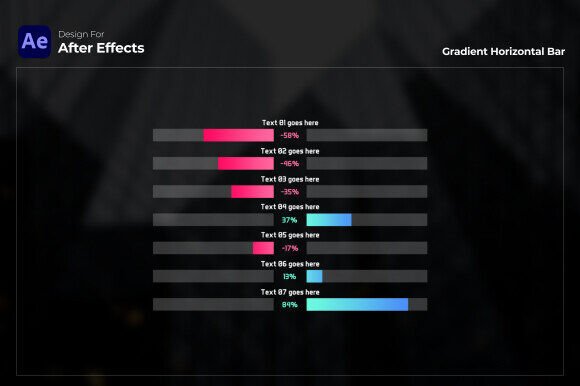
At its core, a gradient horizontal bar chart in After Effects replaces flat, single-color bars with smooth color transitions. Instead of a solid blue rectangle representing 74 percent, you might see a bar that shifts from a deep teal to a lighter aqua, or from a warm orange to a soft yellow. The gradient effect introduces depth without adding unnecessary visual clutter. The horizontal orientation itself is worth noting because horizontal bar charts excel when category labels are long, when comparing many items, or when the natural reading flow benefits from left-to-right scanning.
What separates purpose-built After Effects templates from manual chart creation is the automation layer. Many gradient horizontal bar templates include expression-driven controls that recalculate bar lengths automatically when you change the underlying values. This means someone without deep animation experience can drop in their numbers, adjust a few dropdown settings, and end up with a chart that looks custom-built. The gradient styling, combined with automatic value calculation, creates a middle ground between static spreadsheet charts and fully bespoke motion graphics.
Where the Gradient Style Excels Compared to Flat and 3D Alternatives
Data visualization inside motion graphics generally falls into three visual categories: flat solid-color charts, gradient-enhanced charts, and three-dimensional extruded charts. Each has its place, and the gradient horizontal bar lands in a thoughtful middle position. Flat charts read clearly at small sizes and render quickly, but they can feel sparse or outdated in contexts like investor presentations or product launch videos where visual polish carries weight. Three-dimensional bar charts add dramatic perspective but often sacrifice quick readability. Viewers may struggle to determine whether a bar reaches 68 or 72 percent when the perspective distorts the visual reference points.
Gradient bars offer a compromise. The color transition adds sophistication without breaking the clean two-dimensional plane that makes bar charts easy to read. A carefully chosen gradient can also encode additional meaning. A bar that moves from a muted gray to a vibrant green might suggest progress from baseline to target. A warm spectrum across multiple bars can indicate intensity or urgency without requiring separate labels. The horizontal layout reinforces this by giving the gradient a longer, more visible runway across the bar's span.
Automatic Value Calculation and What It Means for Workflow
One of the more practical features in modern gradient horizontal bar templates is the automatic value calculation system. In traditional After Effects chart building, changing a single data point might require manually adjusting shape layer paths, text layers, and alignment across multiple elements. Templates with expression-driven automation let you type a number into a control panel — often a simple text field or slider — and watch the bar length and corresponding label update instantly.
This automation speeds up iteration considerably. When a client revises sales figures the night before a presentation, you are not rebuilding anything. You update the values, render, and move on. The time savings compound across projects, particularly for teams producing regular reports, monthly analytics videos, or recurring client deliverables. The dropdown menu feature found in some templates takes this further by letting you toggle between different numbers of bars, adjusting the composition structure without requiring timeline manipulation.
That said, automation brings a tradeoff familiar to template users: you gain speed but accept the template's structural constraints. If you need an unusual bar shape, a non-standard animation curve, or a layout that deviates from the template's preset options, you may spend more time overriding automated behaviors than you would have spent building from scratch. Understanding where that line falls for your specific project helps determine whether a gradient horizontal bar template saves time or introduces friction.
Comparing Gradient Horizontal Bar Templates to Other After Effects Chart Solutions
Several types of chart solutions exist within After Effects, and each fits a different use case. Native shape layer builds offer complete creative control. You design every element, animate every transition, and own every pixel of the result. This approach suits projects with very specific branding needs or unusual chart formats but demands significant time and After Effects expertise. A graphic designer comfortable with expressions might spend hours on a single chart; someone less technical could spend days.
Third-party scripting tools and extension panels occupy another category. These often provide chart-building interfaces directly inside After Effects, generating bars, lines, and pies based on spreadsheet-style input. Many support gradients and offer more chart types than a single template. However, they typically come with steeper learning curves, ongoing subscription costs, or compatibility constraints across After Effects versions.
Gradient horizontal bar templates sit in a third space: pre-built project files that you open, edit, and render within After Effects. No plugins required, full HD 1920x1080 resolution out of the box, and compatibility with After Effects CC 2023 and above. The tradeoff is narrower scope. A template designed for horizontal bar charts will not suddenly produce a radial chart or a scatter plot. If your project spans multiple chart types, you might need several templates or a more flexible tool. But if horizontal bars match your data story, the focused template often delivers faster, cleaner results than general-purpose alternatives.
When Gradient Horizontal Bar After Effects Templates Are the Right Choice
Certain project characteristics align especially well with what these templates offer. Business reports and annual summaries frequently use horizontal bar charts to rank products, regions, or performance metrics. The gradient styling elevates what could be a dry slide into something visually current, and the automatic value updates mean quarterly revisions proceed smoothly. Marketing presentations benefit similarly, particularly when the data needs to feel dynamic rather than static. A gradient bar animating onto screen with a smooth ease conveys motion and progress in ways a PowerPoint chart rarely matches.
Educational videos and tutorial content represent another strong fit. Instructors explaining survey results, historical trends, or scientific comparisons can use gradient horizontal bars to keep learners engaged without overcomplicating the visual. The free font links provided with some templates further reduce friction for educators working with limited budgets. Time-sensitive projects — conference keynotes, investor pitch decks, social media campaigns with fixed launch dates — also benefit from the time-saving structure. When the deadline is immovable, starting from a working template often beats starting from a blank composition.
Situations Where Alternatives Might Serve Better
No single template suits every project, and recognizing the boundaries prevents frustration. Projects requiring highly specific corporate brand guidelines may find that a template's gradient presets and color controls do not map precisely to an established palette. While templates are customizable, pushing them too far from their intended structure can create more work than building cleanly from nothing. In these cases, native After Effects tools or a dedicated chart builder with precise color management might be the better path.
Projects needing multiple chart types in a single cohesive video also warrant consideration. If your project includes horizontal bars, vertical columns, line graphs, and pie charts, purchasing one horizontal bar template solves only part of the problem. The visual consistency across chart types becomes a new challenge. Audiences notice when bars have gradient styling but lines appear flat, or when animation easing differs between sections. A unified chart toolkit or plugin might serve this broader need more effectively than patching together individual templates.
Extremely large datasets present another limitation. Templates with dropdown menus to adjust the number of bars typically support a practical range — perhaps up to 10 or 15 items. If you need to visualize 50 or 100 data points, the template's layout assumptions may break down. Horizontal bars for that many items require careful spacing, possibly scrolling, and font sizing decisions that a pre-built template may not accommodate gracefully.
Making an Informed Decision About Gradient Horizontal Bar Resources
Evaluating whether a gradient horizontal bar After Effects template fits your workflow involves weighing several practical factors. Consider the frequency of your chart creation. If you produce data-driven content weekly or monthly, the time savings multiply quickly and justify the template investment. If you need one chart for one project this year, the value proposition shifts. Think about your team's After Effects comfort level. Templates marketed as beginner-friendly genuinely reduce the barrier to entry, but "easy to customize" means different things to different users. Someone who has never opened After Effects will still face a learning curve, just a gentler one than building from scratch.
Resolution requirements matter too. Full HD 1920x1080 covers most current use cases, but if your project demands 4K output or vertical aspect ratios for mobile-first platforms, confirm compatibility before committing. The absence of plugin requirements is a genuine advantage that simplifies sharing projects across computers and collaborators. Every added plugin introduces potential version conflicts, so a template that runs on native After Effects features keeps things portable.
The free font link provision often included with these templates addresses a common pain point. Opening a template only to find missing fonts derails momentum. Knowing the fonts are freely accessible removes that obstacle, though you may still need to match them to your organization's typography standards.
The Broader Context of Data Presentation Trends
Gradient styling in data visualization has grown beyond a passing trend. Interfaces, dashboards, and broadcast graphics increasingly use subtle gradients to differentiate elements, create hierarchy, and add visual warmth to what might otherwise feel like sterile numerical displays. The horizontal bar format itself remains a workhorse in data communication precisely because it handles categorical comparisons so naturally. The combination of the two — gradient aesthetics with horizontal readability — reflects a broader shift toward data presentations that feel integrated with design rather than pasted on top of it.
For professionals choosing tools, the decision ultimately rests on whether the template's structure aligns with the story the data needs to tell. A gradient horizontal bar After Effects template provides a polished, efficient pathway when the format matches the message. When the data demands a different shape, a different orientation, or a different visual language altogether, the same critical eye that evaluates chart choices should guide tool selection. Understanding the strengths and limits of any resource leads to better outcomes than adopting it uncritically or dismissing it entirely.
In practice, many seasoned motion designers keep multiple approaches available. They might use a gradient horizontal bar template for quick-turnaround client work, build custom charts in native After Effects for flagship projects, and explore scripting tools when the scope demands variety. The template does not replace skill or judgment — it complements them by handling the repetitive parts of chart building so that creative energy can go toward the details that make a presentation memorable.