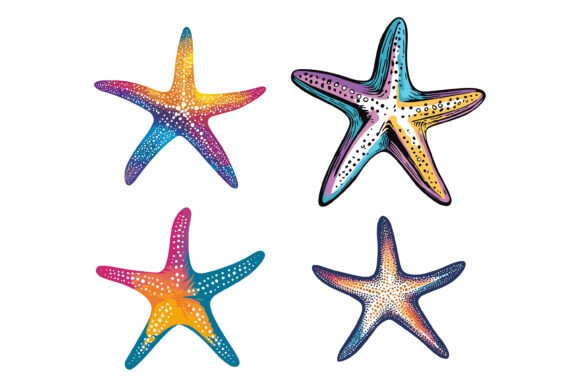
Starfish Illustration Collection: Professional AI EPS Files
Finding the right visual elements can slow down even the most organized creative workflow. When you need polished, editable graphics that maintain consistency across a project, starting from scratch is rarely the most efficient path. The Starfish illustration collection offers a curated set of AI, EPS, and JPG files designed to remove that friction. Built with a clear focus on structure, detail, and cross-platform compatibility, these vector illustrations give designers, marketers, and content creators a ready-made resource that adapts to a wide variety of projects—without sacrificing quality or control.
What really sets usable asset packs apart is how easily they integrate into existing work. For anyone juggling branding updates, digital content, or print materials, a collection like Starfish becomes more than a time-saver. It becomes a flexible building block that supports consistent visual storytelling. The combination of source files and a well-organized internal structure means you can extract exactly what you need, edit it quickly, and maintain the polish your audience expects.
Organized Design That Shortens Production Time
Many downloadable graphic packs deliver solid artwork but bury it inside cluttered layers or poorly labeled groups. Starfish takes a different approach. Each file arrives with a neat, predictable layer structure that lets you dive into editing without wasting time hunting for elements. For professionals who bill by the hour or work under tight deadlines, this organizational clarity directly translates into faster turnaround and fewer production headaches.
Whether you open an AI or EPS file, you’ll find components grouped logically—background, main subject, highlights, shadows—so you can isolate, recolor, or repurpose individual parts in seconds. This structure also reduces the risk of accidentally moving a critical path or deleting a hidden detail. For teams collaborating on a brand guide or an infographic series, the consistency from one file to the next eliminates the need to relearn a layout each time. One art director noted that swapping a set of seasonal icons across twelve social media templates took under half an hour simply because every Starfish file followed the same naming conventions and hierarchy.
Precision in Details and Style Consistency
Detail work often reveals the true quality of a vector set. With Starfish illustrations, the attention to curve smoothness, line weight, and proportional balance is evident whether you’re viewing the graphic at 32 pixels or stretched across a billboard mockup. That level of refinement matters most in professional settings where inconsistent stroke widths or awkward anchor point placements can make a design feel unpolished. Because the collection was built with a uniform style language, you can combine multiple illustrations into one scene—say, a marketing dashboard or a children’s book layout—without jarring visual shifts.
This stylistic consistency also supports brand reinforcement. When you need a series of icons for an app onboarding flow, mixing artwork from different sources often leads to a disjointed experience. Starfish helps you avoid that patchwork effect. Each icon, symbol, or spot graphic shares the same underlying design logic, so your user interface, print brochure, or explainer video holds a cohesive look. One small business owner used the pack’s travel-themed assets to create both a printed visitor map and a matching interactive web guide; the seamless visual transition between the two mediums reinforced the local brand’s friendly, approachable identity.
True Cross-Platform and Multi-Format Versatility
It’s not unusual to encounter vector files that behave beautifully in one application but turn problematic in another. Starfish was made with both Mac and Windows users in mind, and the AI and EPS formats are structured to play well with the most common design tools—Adobe Illustrator, CorelDRAW, Affinity Designer, Sketch, and even presentation software like PowerPoint when imported properly. Including JPG versions adds a quick preview layer and a fallback for environments where vector support is limited, such as certain online publishing platforms or basic document editors.
This flexibility makes the collection especially useful in multidisciplinary teams. A graphic designer can fine-tune an EPS illustration in Illustrator, hand it off to a web developer who embeds an SVG export into a website, and provide a high-resolution JPG to the marketing manager assembling a newsletter—all from the same base file. The organized layer structure also simplifies exporting exactly the right variation for each output. Instead of manually cropping or duplicating artboards, you toggle visibility and export. For anyone working on both print and digital campaigns, this multi-format readiness cuts down on wasteful conversion steps and preserves the crispness that vector art is known for.
Effortless Editing and Color Adaptation
One of the strongest practical benefits of the Starfish collection is how straightforward it is to recolor, resize, and reshape every element. Because the artwork is fully vector-based, you can scale infinitely without losing quality—essential for projects ranging from tiny app bar icons to large-format trade show banners. But beyond simple scaling, the ability to change colors globally or alter specific parts of an illustration means the same base graphic can serve multiple brand identities or seasonal themes.
Consider a nutrition coach who creates weekly meal planner sheets. With the Starfish food-related icons, she can quickly adjust the palette to match different client brand colors, swap a solid fill for a gradient to suit a modern landing page, or tweak the shape of a fruit icon slightly so it better reflects a specific product line. These modifications happen directly inside the AI or EPS file without pixelation or awkward clipping. For hobbyists working on scrapbook designs or educators preparing classroom worksheets, this editability lowers the barrier to professional-looking results. You don’t need advanced illustration skills; a basic grasp of selection and color tools is often enough to make meaningful changes.
Real-World Uses Across Industries and Formats
The range of use cases for a well-crafted vector illustration set goes far beyond what many people initially imagine. Here are a few scenarios where the Starfish collection proves particularly valuable, though the possibilities extend much further.
- Print design and publishing: High-resolution JPGs and scalable vector versions allow you to insert illustrations into book interiors, magazine layouts, brochures, and flyers without worrying about dpi. The organized layers help when preparing spot-color separations or adjusting artwork for specialty printing processes.
- Web and UI design: Icons, spot illustrations, and empty state graphics enhance user experience without heavy image files. Exporting clean SVGs from AI or EPS files keeps interfaces sharp on retina screens, and the ability to change colors helps match dark mode or accessibility contrast requirements.
- Infographics and data visualization: The highly detailed yet simplified style of Starfish illustrations works well for adding visual interest to charts, reports, and slide decks. Marketers and analysts can replace generic clip art with cohesive artwork that clarifies concepts without distracting from the data.
- App and software icons: Because the collection delivers polished, pixel-consistent detail, it’s well-suited for favicon design, navigation icons, and in-app badges. Developers can work directly with the vector source to generate all required sizes while maintaining crisp alignment.
- Educational resources: Teachers and instructional designers often need engaging graphics that can be adapted for worksheets, e-learning modules, and classroom posters. Starfish provides artwork that can be recolored for different age groups or learning contexts, and the simple layer structure makes it easy to create labeling exercises or step-by-step visuals.
Who Gains the Most from This Collection
While almost anyone who works with visuals can benefit from high-quality vector assets, certain groups stand to gain the most immediate value. Freelance graphic designers and small studio owners can build an editable asset library without spending hours on each new graphic, freeing up time for layout and client strategy. Marketing professionals and social media managers get a consistent visual toolkit they can adapt across campaigns, maintaining brand integrity without repeatedly commissioning custom illustrations.
Bloggers and content creators who pair written content with featured images often struggle to find distinctive visuals that don’t look like everyone else’s. The Starfish style—crisp, modern, and carefully detailed—provides an alternative to overused stock photography or generic icon sets. Entrepreneurs setting up e‑commerce sites or product demo pages can quickly pull relevant illustrations, adjust them to match the store’s colors, and present a polished appearance early on, which can help build customer trust.
Even educators and nonprofit organizations find value here. Grant proposal presentations, community outreach materials, and workshop handouts benefit from clear, friendly illustrations that can be localized or personalized. Because the files are straightforward to edit, volunteers with only basic computer skills can make necessary changes without a steep learning curve.
What to Keep in Mind Before You Start
No single resource fits every situation perfectly, and being clear about what the Starfish collection includes helps prospective users make informed decisions. First, while the AI and EPS formats are widely supported, you do need vector editing software to fully modify the illustrations. Programs like Adobe Illustrator, CorelDRAW, or Affinity Designer are ideal; users who rely solely on free browser-based tools may find the editing experience limited, though they can still use the included JPG files in a pinch.
Additionally, the collection’s design style, while versatile, may not match every brand’s existing visual identity. If your project demands a highly photorealistic or hand-drawn look, you should compare the preview images carefully to see if the clean, precise aesthetic of Starfish aligns with your direction. That said, the ability to recolor and tweak offers surprising flexibility, and many mixing artists combine Starfish illustrations with other design elements to create a hybrid style that feels both unique and consistent.
Finally, for those working on extremely large-scale environmental graphics or product packaging that requires Pantone matching, you’ll want to verify that the file structure holds up under professional preflight checks. In practice, the AI and EPS files are solid enough to pass through most commercial prepress workflows without issue, but testing a sample on your specific printer setup is always a wise step. The attention to detail in the layer organization also makes it easier to apply finishing adjustments like trapping or overprint settings when needed.
The Starfish illustration set offers a thoughtful balance of creative freedom and practical everyday usefulness. By combining clean, detailed artwork with an editing‑friendly structure and multi‑format support, it helps professionals, creators, and teams move from concept to finished product more efficiently. Whether you’re refreshing a brand, building a new app interface, or simply looking for cohesive graphics that won’t fight against your design software, this collection provides a reliable starting point that respects both your time and your creative standards.